Typical AI mistakes: hands, text, shadows and reflections
Image generators fail most often at things that follow strict rules. Here is why those four areas are still worth checking, what exactly to look for, and when a real photo shows the same supposed mistakes.
Why hands keep failing
A hand is a strict construction: five fingers, four joints each, one thumb on the correct side, and a plausible way of holding whatever it touches. Generators learn from images, and in those images hands are often small, in shadow or partly hidden — so this is one of the areas with the least reliable training data.
Look for outlines that merge into one another, a finger that starts twice, a nail that sits on the wrong side of a knuckle, or a hand that grips an object without touching it. Watch how fingers behave where they meet an object: that transition is where most errors hide.
Keep in mind: Current models are much better at hands than those of a year ago. Odd hands can also occur in real photos of motion, in low light or with strong wide-angle distortion.
Text, signs and logos
Letters are strict too: a specific number of strokes in a specific order. That is why text in AI images often looks almost right from a distance but turns into invented characters when you zoom in, or stays completely blurry where it should be sharp.
Check signs, shop fronts, book spines, t-shirts and screens. Ask yourself whether the text is legible, whether it is in a real language, and whether the letters are consistently sharp within one plane of the image.
Keep in mind: Unreadable text is only suspicious when the resolution allows reading it. Real photos of distant signs are also unreadable, and scripts you do not know are hard to judge at any size.
Light and shadow that disagree
Pick the brightest point in the scene and work out the direction of the light. Then follow it through the image: do all shadows point away from it? Do highlights sit on the sides that face the light? Is one person lit from the front while the person next to them is lit from the side?
Mismatched lighting direction is the closest thing to a reliable clue, because a camera cannot avoid consistency: light in a real scene comes from real sources.
Keep in mind: Real scenes with several light sources — a shop window, a neon sign, a phone screen — produce exactly the same kind of chaos. So look for a mismatch that has no visible cause.
Reflections and mirrors
Reflections are a counting exercise. If two people stand in front of a mirror, there should be two reflections. The reflection of a window should show the same window, from a plausible angle, in a plausible size.
Common errors: too many or too few reflected objects, a reflection that shows a different room, water that reflects nothing, or sunglasses that mirror a landscape while the person stands indoors.
Keep in mind: Real reflections are rarely perfect either — wind distorts water, curved glass stretches faces, and reflections are often much darker than the object itself.
Repetition and copy-paste structures
Generators sometimes repeat elements they have learned as patterns: the same window twice in a row, identical people in the background, a fence whose posts become evenly spaced in an impossible way. In real architecture, small irregularities are normal — the third window is a bit narrower, the fence leans.
So look for suspicious regularity in buildings, crowds, foliage, or patterns in fabrics.
When real photos show the same mistakes
Every clue above has innocent explanations, and that is the most important thing to remember. Smartphone cameras calculate: they merge multiple exposures, sharpen aggressively and blur backgrounds artificially, which can make a real photo look synthetic. Screenshots, chat-app compression and heavy filters remove exactly the fine detail you would otherwise check.
So a single clue is never enough. Treat a finding as a reason to look at the rest of the image more carefully, and be careful with conclusions about other people's photos.
A single feature is not proof. Real photos also show smooth surfaces, blurry lettering and brightened shadows. Treat every clue as a reason to check origin and several observations together.
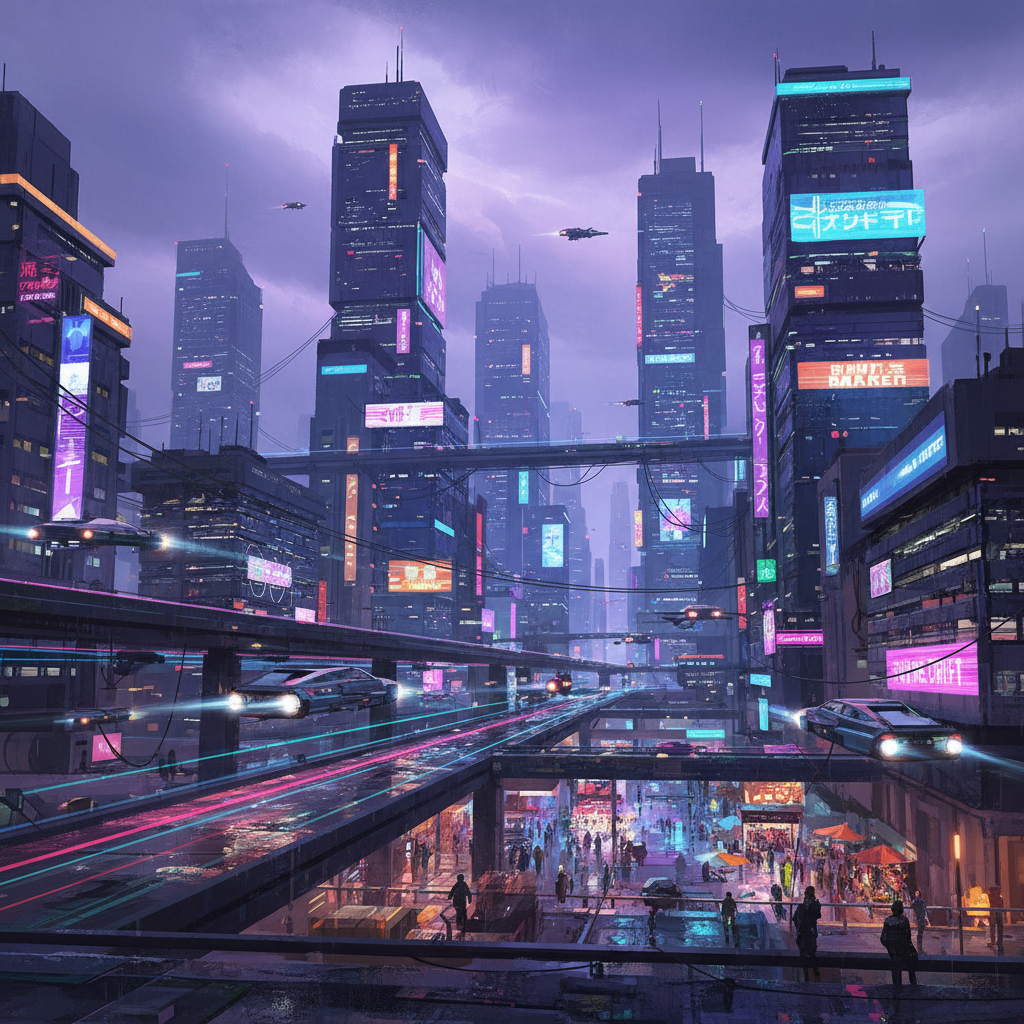 AI image
Text inside the image
Letters follow strict rules and must be reproduced character by character. That makes text the most productive clue — but blurry lettering on real signs exists just the same. A single find stays a suspicion.
AI image: generated for this project (media.base44.com)
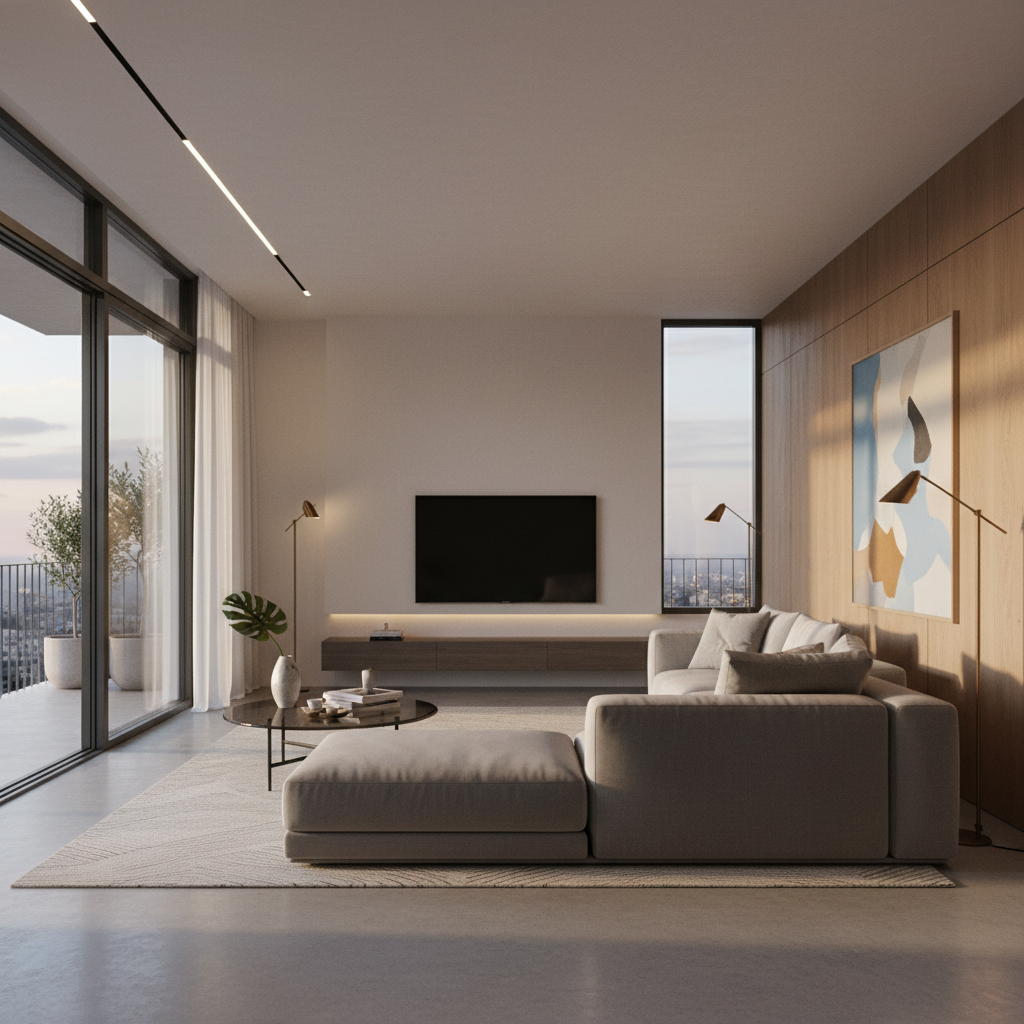 AI image
Interior
In interiors, look for repetition: identical windows, identical chairs, patterns without deviation. In real architecture the third window is often slightly narrower. Again: a deviation or its absence is no proof.
AI image: generated for this project (media.base44.com)
Mini quiz
Mini quiz: typical mistakes and their limits
Three questions about the clues in this guide, including the one that trips people up most.
1. Which areas are usually worth a second look first?
Frequently asked questions
Why do AI images often have problems with text?
Letters follow strict rules that generators have to reproduce character by character. The result often looks plausible at a glance but stops being readable as soon as you look closely.
Are odd hands still the best clue?
They are one good clue among several. Newer models handle hands much better, so text, lighting direction and reflections have become more useful than hands alone.
What if I only find one clue?
Treat it as a hint, not as a verdict. Real photos contain blur, distortion and editing artefacts that look like AI mistakes, so a single finding is rarely enough for a firm judgement.
Key takeaway
Concentrate on areas with strict rules: hands, text, light direction and reflections. One clue means “suspicious” — several independent clues together are what make a case.
Practise with feedback
Every game has ten images: five real photos and five AI images. After each guess you see the answer, so you learn while you play. Free, no account needed.
Play the quizMore guides
How to Tell if a Photo Is AI-Generated: 6 Practical Checks
How to tell if a photo is AI-generated: six checks in the order that helps — source, first impression, details, physics and tools, plus where each clue fails.
How AI-generated images are actually created
Training data, the diffusion process and the polished look: why generators win at smooth surfaces and fail at strict rules.
How reliable is AI detection? Detectors, metadata and watermarks
What detectors really measure, why missing watermarks prove nothing, how to check suspicious voice messages and manipulated images.
Wir nutzen lokalen Speicher für Betrieb, Sicherheit und Spielfortschritt. Mit „Alle akzeptieren" erlaubst du zusätzlich Werbung (Google AdSense), die Cookies setzen kann. Details in der Datenschutzerklärung.